 X-Dreamers
Was Paul a Tentmaker? Work and Ministry in Corinth
Acts 18:3 says Paul made tents with Aquila and Priscilla in Corinth while he preached. Why he kept working, when he stopped, and what that means for work today.
· 4 min read
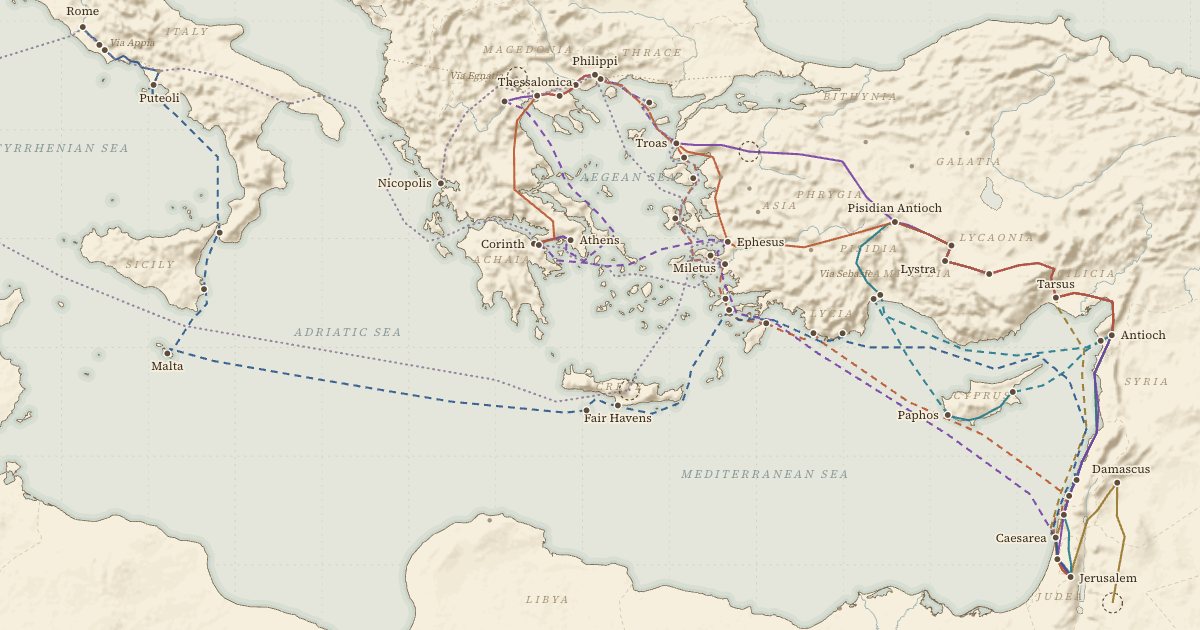
Yes. Acts 18:3 says that in Corinth Paul lived and worked with Aquila and Priscilla, who were tentmakers by trade, because he had the same craft. On the Sabbath he reasoned in the synagogue. He worked so that the believers he served need not support him, and later said his own hands had met his needs (Acts 20:34).
Paul's Roads shows where this happened, on the second journey, about AD 50–52: open Corinth on the map of Paul's journeys → (opens in a new tab)
What does Acts 18 say?
And because he was of the same craft, he abode with them, and wrought: for by their occupation they were tentmakers. (Acts 18:3)
And he reasoned in the synagogue every sabbath, and persuaded the Jews and the Greeks. (Acts 18:4)
Paul had come from Athens to a rich Roman colony, the capital of Achaia, which controlled trade across the Isthmus through its two ports. Aquila and Priscilla had arrived from Italy “because that Claudius had commanded all Jews to depart from Rome” (Acts 18:2). The lab dates that order to AD 49 and marks the date Strongly supported: Suetonius records the expulsion and Orosius dates it, though some link it to a milder measure of AD 41. Their shared trade is Textually stated.
So Paul's months in Corinth began in a workshop, working beside two people of the same trade.
Why did Paul keep working?
Not because he had to. Writing to Thessalonica, he says he had the right to be supported and gave it up: “Not because we have not power, but to make ourselves an ensample unto you to follow us” (2 Thessalonians 3:9). He tells the same church:
For ye remember, brethren, our labour and travail: for labouring night and day, because we would not be chargeable unto any of you, we preached unto you the gospel of God. (1 Thessalonians 2:9)
The lab's Letters mode places the writing of 1 Thessalonians at Corinth (opens in a new tab) (Strongly supported), so he probably wrote those words in the same months he was making tents.
Tentmaking was not a fixed rule for Paul either. When Silas and Timothy arrived from Macedonia, “Paul was pressed in the spirit” (Acts 18:5) and gave himself wholly to the word, and he later says that what he lacked “the brethren which came from Macedonia supplied” (2 Corinthians 11:9). He worked when work kept the gospel free of charge, and he accepted gifts when they came.
What did he say about it later?
Saying goodbye to the elders of Ephesus at Miletus, he pointed to his own work:
Yea, ye yourselves know, that these hands have ministered unto my necessities, and to them that were with me. (Acts 20:34)
His trade fed his co-workers as well as himself.
What does this mean for us?
Many Christians today do what Paul did: they hold a job and serve a church or start a ministry at the same time. Paul's example does not make that the only faithful way, and it promises no reward in money. It does show that a trade is not a distraction from ministry. It kept Paul independent, gave him an example to set, and put him beside ordinary people every working day.
That last part matters if you are looking for a venture or ministry worth starting. Daily work shows you real problems, where people lose time and money, before you have a product to sell. Our free Equip lesson Start with a problem, not a product shows how to write those problems down, separating what you saw from what you guess.
For the whole route from Antioch to Corinth, read Paul's Second Missionary Journey, Step by Step (opens in a new tab). Then see the city where the workshop stood: Corinth in Paul's Roads → (opens in a new tab)